Kolkata (Calcutta)
Basham’s involvement with the city of Calcutta, the erstwhile capital of British India, underlies (and underlines) the significance of the Riverine Metropolis as a place of tremendous cultural coalescence in pre-colonial, colonial and post-colonial times. Its architecture, archival and museum collections figure prominently in the Basham archive and are analysed in our digital platform The ‘Wonders’ that Basham Saw. Significant focal points include ‘indigenous’ structures such as the Dakshineshwari Temple, and ‘colonial’ ones such as the Victoria Memorial. Layers of pre-colonial, colonial and post-colonial art and design are discernible across collections such as the Asiatic Society and Indian Museum, and in places of worship including the Jain temple (1867) and Ramakrishna Mission (Belur Math, early 20th century).
-
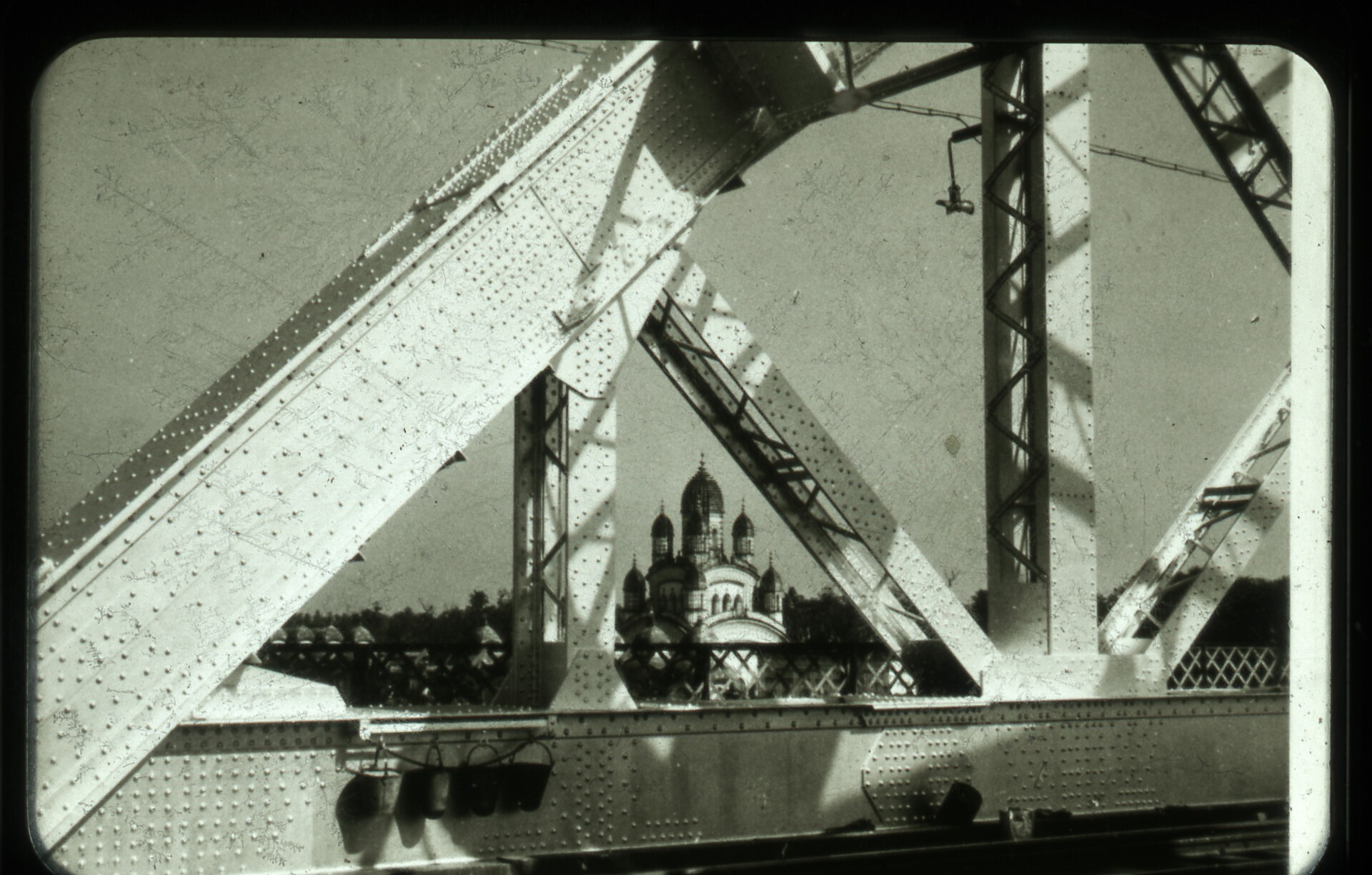
 circa 1950sDakkhineswari Temple (Dakshineshwar Kali Temple founded 1855), to which the Hindu mystic Ramakrishna Paramhamsa (1826-1886) was attached as priest, seen through the riveted steel girders of the Willingdon Bridge (completed 1931, subsequently renamed Bally Bridge, now Vivekananda Setu) over the Hoogly River (a distributary of the Ganga/Ganges).
Popular oleograph(?) poster of Ramakrishna and his wife Saradadevi, with the Dakshineshwar Temple in the background.
-
-
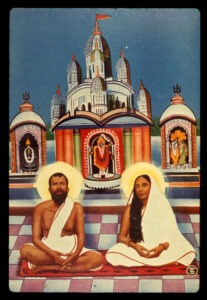
circa 1970s Behind them the Dakkhinesvari temple, Calcutta, where RamaKrishna lived for many years -

circa 1970s Beside him is Kali in the form worshipped at the Dakkhinesvari temple
Belur Math is now the headquarters of the Ramakrishna Mission, founded by Ramakrishna’s chief disciple, Swami Vivekananda (1863-1902). Vivekananda carried Ramakrishna’s legacy onto the international stage, becoming a primary conduit of Vedantic spirituality and mysticism and Yogic philosophy to the Western world. Alongside raising awareness of a syncretic Hindu spirituality, Vivekananda fulfilled Ramakrishna’s vision of raising a national consciousness. Coupled with administrative instruments including the census (started 1865), this spiritual mission forms the basis for the constitution of modern Hinduism as a unified, more-or-less coherent religion, accompanied by a philosophical, cosmological and metaphysical infrastructure rooted in the Sanskritic tradition deriving its legitimacy from the Vedas.
-
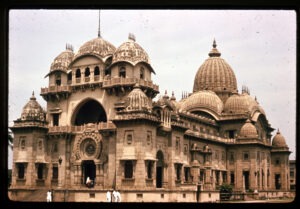 circa 1950s
 -
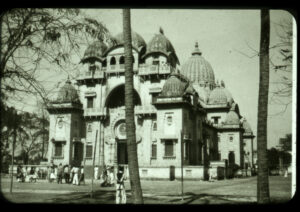 circa 1950s
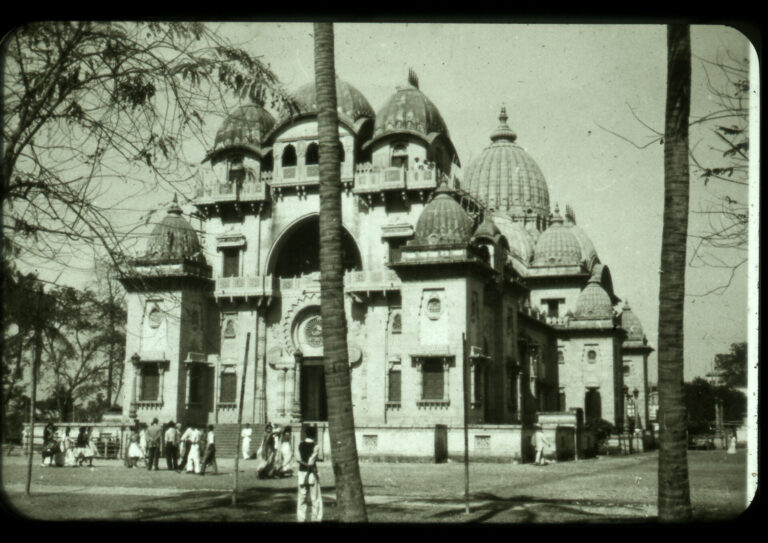
Note the hybridity of architecture in the Belur Math, that includes elements from ancient Buddhist caves, Rajput and Mughal, as well as European architecture.
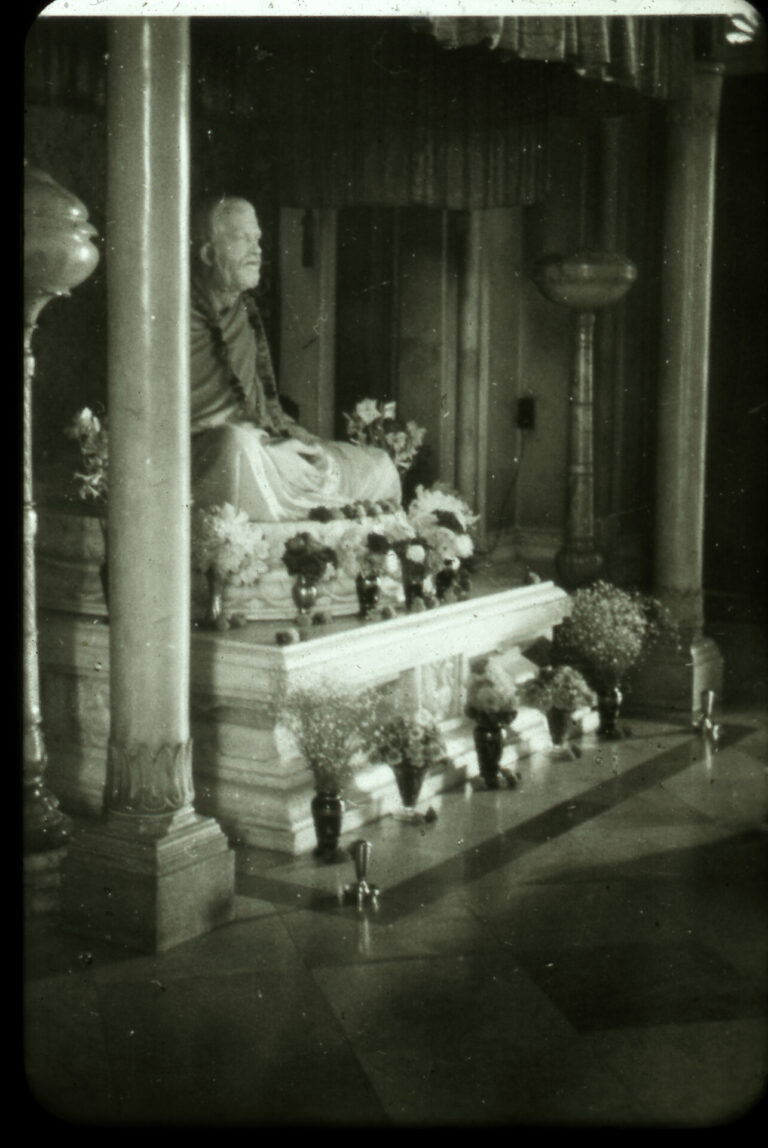
The marble statue of Ramakrishna appears to follow in the illusionistic tradition of neo-classical European portrait sculpture (there’s no identifiable precedent in Indian tradition for such sculptural portraiture).

Belur Math, Swami Vivekananda Temple. Construction commenced 1907, completed 1924. Exterior exhibiting architectural hybridity, interior containing the Sanskrit root-syllable ‘Om’, considered the primal sound of the universe and pathway to spiritual realisation. https://belurmath.org/swami-vivekananda-at-belur-math/
-
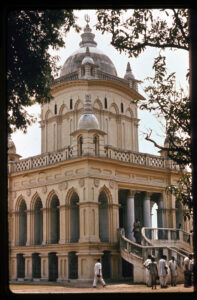 circa 1950sBelur Math, Swami Vivekananda Temple. Construction commenced 1907, completed 1924.
 -
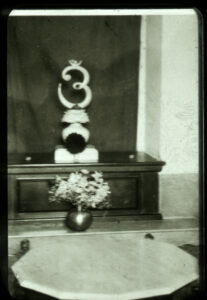
The Vivekananda Temple continues and extends the architectural hybridity of Belur Math, including the use of Gothic arches in addition to Doric columns other ‘ingredients’. Of significance here is the construction of the ‘authentic’ (a singular and unified Sanskritic Hindu tradition of India based on Vedic authority) out of eclectic appropriations and acculturations.
Dakkhineswari Temple (Dakshineshwar Kali Temple founded 1855) in Kolkata (Calcutta)